Using Your Town's Library and Museums as Free Learning Resources: A Weekend Guide
Most towns have a library and at least one museum, and most families drive past both without stopping. But a Saturday morning at the library and a Sunday afternoon in a gallery can do more for a learner than a stack of worksheets. The cost is close to nothing. The preparation takes about ten minutes. What it needs is a little intention — a focus question, a notebook, and the willingness to leave before everyone is tired.
What follows is a weekend-sized plan you can adapt to whatever your town offers: a county library with a local history room, a small volunteer-run museum, a university gallery with free admission, or a heritage house that opens only on Sundays. The premise is simple. Treat each visit as a lesson with a beginning, a middle, and a short, unhurried end.
Plan the Trip in Ten Minutes
Good learning trips fail on logistics, not on content. Before you go, check the opening hours on the website or by phone, since small museums often close on Mondays and sometimes change hours by season. Ask whether there is a quiet hour, a lift, or a cloakroom — practical details that decide whether a visit with a six-year-old lasts twenty minutes or ninety.
Then choose one focus question. Not a theme like “the Romans” or “the Victorians”, which is too broad to hold anyone's attention, but a question: How did people in this town get water before pipes? or What did a shopkeeper's day look like? One question gives the visit a spine and makes the follow-up activity almost automatic.
Pack light: a small notebook each, pencils rather than pens, and a snack for afterwards. Many museums ask visitors to use pencils near artworks and documents, so leave the biros at home. If you want to take photographs, check the signs at the entrance rather than assuming.
What Your Library Card Actually Opens
The books are the smallest part of it. Walk past the front desk and ask what else the building holds. Many libraries keep a local history collection with old maps, photographs, newspapers on microfilm, and street directories — material no search engine will show you, and material that makes a town feel like a place with a past rather than a backdrop.
Ask, too, about membership schemes. Many library systems lend or discount admission passes to nearby museums, and some offer free entry to partner sites for cardholders. The rules vary widely, so the only reliable way to find out is to ask a librarian directly. While you are there, ask about interlibrary loans, language kits, museum-quality reference books, and any science or craft kits in the children's section.
A librarian is the most underused learning resource in town. Say what you are studying — “we're doing a project on bridges” — and you will usually get a handful of books, a suggestion about a local collection, and occasionally a name to contact. That is faster than an hour of searching alone.
Read the Museum Like a Learner, Not a Tourist
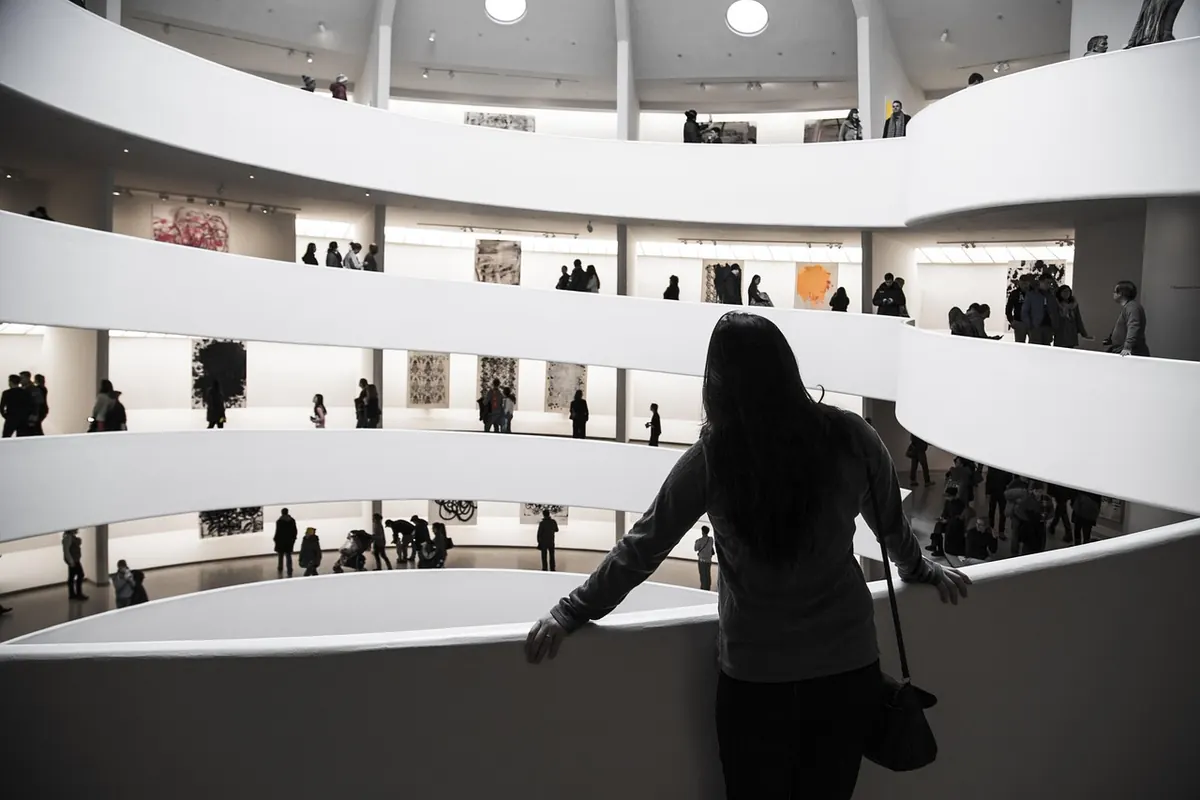
The instinct is to cover every room. Resist it. A gallery visited with attention beats a whole building walked past, and children remember what they examined, not what they passed.
Try the five-object rule. Before you enter, agree that each person will find five things worth stopping for. Then stop properly. The three-question habit works well here:
- What is it, and what is it made of? Look closely enough to answer honestly.
- Who made it, and who was it for? Read the label, then look for what the label leaves out.
- What would you ask the maker? Keep the questions in the notebook; they become writing prompts later.
Sketching slows the eye in a way that photographs never do. Ten minutes with a pencil in front of one object — a carved chair, a stone tool, a portrait — will teach more about shape, material, and craft than thirty quick snapshots. Nobody needs to be good at drawing for this to work.
For younger children, a light scavenger hunt keeps feet and attention moving together: find the oldest thing in the room, something that would fit in a pocket, something that looks unfinished, something with a mistake in it. Older learners can compare two labels on similar objects and decide which one explains more. If you have a mixed-age group, let one child lead for fifteen minutes and choose the next room, then swap.
A Weekend Plan You Can Copy
Saturday morning, library. Arrive when it opens, spend twenty minutes on the focus question in the relevant section, then fifteen minutes in the local history room looking at one map of the town from before the war. Ask a librarian one question. Leave before anybody is bored.
Saturday afternoon, follow-up at the kitchen table: draw the route from home to the library as it appears on the old map, or list three things the map shows that no longer exist. Twenty minutes is plenty.
Sunday afternoon, museum. One or two galleries, five objects each, sketch one, and finish with a drink nearby. If admission is charged and the budget is tight, look for free entry days, community passes, or a smaller volunteer museum instead. The learning is in the attention, not the ticket price.
Follow-Up Activities That Take Twenty Minutes
The visit fades quickly unless something happens afterwards. Keep the follow-up small and low-stakes — no worksheets, no report writing.
- Rewrite an object label. Take an object from the museum and write a label for someone your own age, in two sentences, without using the words on the original.
- Draw from memory. Sketch the object you remember best, then compare it with a photo or a quick return visit.
- Write to the museum or library. A short letter describing a favourite object, or asking the question you never got answered, is genuine writing with a real reader.
- Make a then-and-now list. What did this town have fifty years ago that it lacks now? What has it gained?
- Build a word jar. Every unfamiliar term from a label or a book goes on a slip of paper. Once a week, pull three out and look them up together.
- Plan the next visit. Ask what each person wants to see next time and write it down. The list becomes the calendar.
Make It a Monthly Habit
One trip is a nice afternoon. A habit is where the learning accumulates. Put a repeating note in the calendar — the first Saturday of the month, say — and keep a running list of places to try: the library's map room, the small museum in the next town, the university gallery, the heritage railway that opens in spring. Rotate the focus question each time so the same building gives you something new.
Keep the notebook from each visit. After a year, those pages are a record of what your family noticed and how their questions changed, which is more useful than any test score. And keep the bar low: two hours, one question, one small activity afterwards. A library card and a free Sunday afternoon will carry a surprising amount of learning if you simply keep showing up.
Photo: Ichigo121212 / Pixabay
Common Mistakes in Classroom Group Work and How to Fix Them
A practical guide to the three failures that quietly wreck classroom group work — uneven participation,...
Five Low-Cost Creativity Prompts for Reluctant Writers
Five minimal-supply prompts — six-sentence stories, object manuals, found words, dialogue, and hand-drawn...
About Us