What Is Project-Based Learning? A Plain-English Guide for Parents
What Is Project-Based Learning? A Plain-English Guide for Parents
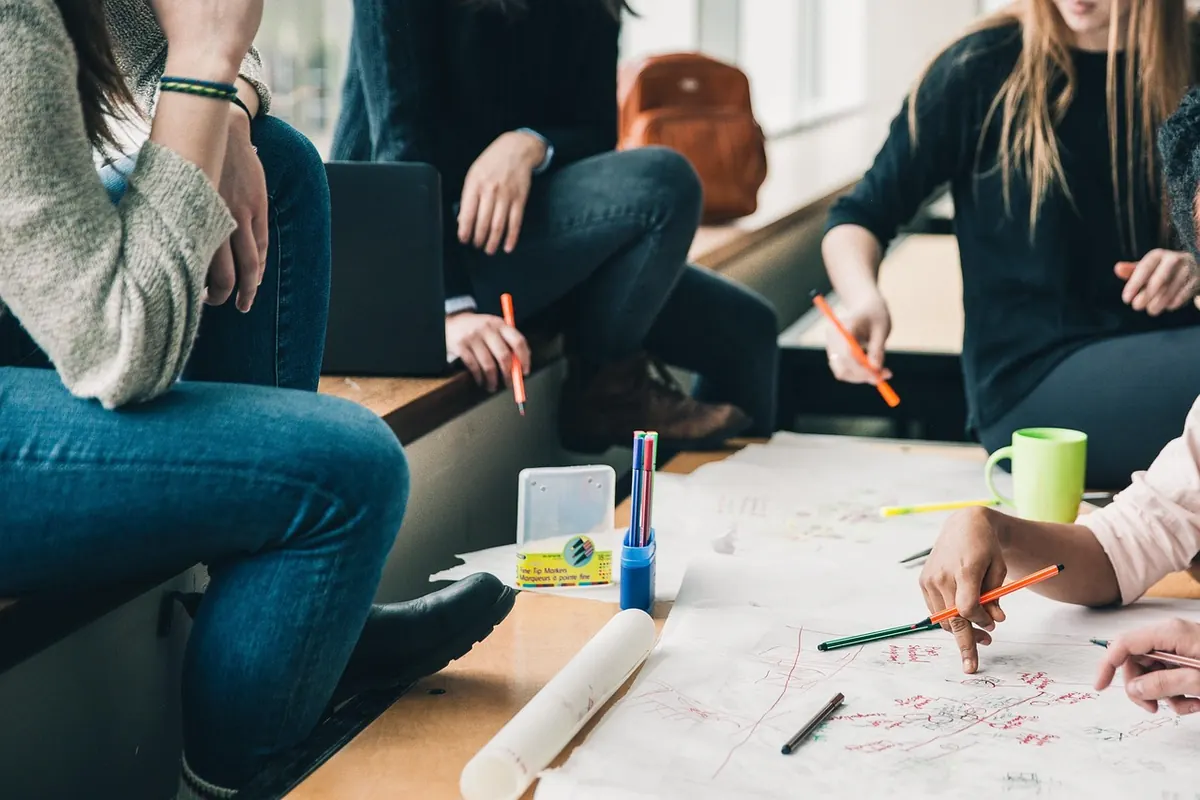
Your child comes home talking about a cardboard bridge, a lunch-waste survey, or a plan to redesign the school garden. The kitchen table fills with sketches, tape, stray leaves, and questions you didn’t expect. Maybe your child is arguing that the bridge needs stronger sides, or wondering why so much food gets thrown away, or measuring the garden to see how many raised beds will fit. That mix of curiosity, mess, and purpose is often your first real look at project-based learning.
Project-based learning—often shortened to PBL—is a teaching approach in which students learn by working on a meaningful project over time. Instead of moving through a worksheet one blank at a time, they investigate a real question, apply skills to a concrete task, and create something they can explain or share. The project is not a reward after the “real” learning. It is the vehicle for the learning.
The Short Answer
In plain English, project-based learning means students learn through a project, not just after one. A strong PBL unit usually starts with a question or problem worth caring about, gives students time to research and test ideas, asks them to revise their work, and ends with some kind of public product: a model, a presentation, a report, a service, a podcast, a garden plan, or a prototype.
The teacher still teaches. There are still reading, math, science, writing, and social studies skills. But those skills are used in service of a larger goal. A student may learn measurement because the garden beds must fit the space, persuasive writing because the lunch-waste proposal needs to convince the principal, or research skills because the bridge design must be based on evidence rather than guesswork.
What It Looks Like in Real Life
PBL can look different from classroom to classroom, but it often has a recognizable rhythm. A class might spend several weeks on a single project, with mini-lessons along the way. The teacher might introduce a driving question, help students form teams, check in on progress, teach a skill just when students need it, and guide them through revision.
- The cardboard bridge: Students design and build a bridge, test how much weight it holds, revise the design, and explain the engineering choices behind it.
- The lunch-waste survey: Students collect data on how much food is thrown away, graph the results, interview cafeteria staff, and propose practical changes.
- The school garden redesign: Students measure the plot, research plants, consider cost and accessibility, create a plan, and present it to a real audience.
What ties these together is not the cardboard or the garden. It is the cycle of asking, investigating, making, testing, revising, and explaining. Your child may come home tired but also more engaged than usual, because the work has a purpose they can see.
The Ingredients of a Strong Project
Not every craft activity or group poster is project-based learning. A strong project usually includes several key ingredients.
- A meaningful question. The project is built around a problem or question that matters, such as “How can we reduce waste in our cafeteria?” or “How can we make our garden usable for everyone?”
- Sustained inquiry. Students do not just look up one fact and stop. They research, ask questions, gather evidence, and dig deeper over time.
- Real skills. Reading, writing, math, science, and communication are woven into the work. The project is not separate from academics; it is a context for them.
- Student voice and choice. Students may choose a topic angle, a design, a research method, or a way to present their findings. Choice builds ownership.
- Critique and revision. Good projects include feedback. Students draft, test, get comments, and improve. The first version is rarely the final version.
- A public product. Students share their work with an audience beyond the teacher—peers, families, younger students, community members, or a panel of experts.
- Reflection. Students think about what they learned, what worked, what failed, and what they would do differently.
When these ingredients are present, the project becomes more than a fun activity. It becomes a structure for learning how to think, plan, collaborate, and persist.
Why Teachers Use It
Teachers use project-based learning because it can make schoolwork feel more relevant and memorable. When students use a skill to solve a problem, they are more likely to remember it and understand why it matters. PBL also gives students practice with skills that are hard to test on a bubble sheet: teamwork, time management, asking good questions, giving feedback, revising, and explaining ideas clearly.
It can also reach students who do not shine in traditional settings. A child who struggles to sit still through a lecture may thrive when building a model. A quiet student may find a voice through a written proposal or a small-group presentation. A student who loves art may discover that design is part of engineering.
A good project does not make learning easier. It makes learning more connected.
That connection is why a child might suddenly care about fractions, soil quality, or persuasive paragraphs. The skill has a job to do.
What Project-Based Learning Is Not
PBL is sometimes confused with other classroom practices, so it helps to clear up a few common misunderstandings.
- It is not just “doing a project.” Making a diorama at home after reading a chapter may be a project, but it is not necessarily project-based learning. PBL involves inquiry, revision, and learning through the process.
- It is not a free-for-all. Good PBL is carefully planned. The teacher sets learning goals, provides structure, teaches needed skills, and checks for understanding along the way.
- It is not a replacement for direct instruction. Teachers still explain concepts, model strategies, and give clear feedback. PBL works best when direct teaching and project work support each other.
- It is not only for older students. Younger children can do simplified projects, such as designing a class library system or studying how to keep the playground clean.
- It is not about a perfect final product. The learning often happens in the messy middle: the failed prototype, the revised plan, the second draft, the conversation after feedback.
If your child’s project looks a little chaotic at home, that does not automatically mean it is going badly. Productive struggle is part of the design. The key question is whether your child can explain what they are trying to learn and what they are doing next.
How Parents Can Support Without Taking Over
The best parent support is usually calm, practical, and behind the scenes. You do not need to become the project manager. Your job is to help your child keep moving, not to rescue them from every bump.
- Ask about the purpose. Try “What question is your project trying to answer?” or “What will you share when it is done?” This helps your child reconnect to the why.
- Help with logistics, not ideas. You might provide a cardboard box, a quiet corner, or a ride to the library. Let your child make the design choices.
- Encourage a plan. Ask your child to list the next three steps. If they are stuck, help them break a big task into smaller pieces.
- Let them struggle a little. If the bridge collapses, resist the urge to rebuild it yourself. Ask “What did you learn from that test?” instead.
- Protect sleep and balance. PBL can be exciting, but it should not become a family stress project. If the workload seems unreasonable, talk with the teacher.
- Celebrate revision. Praise the second draft, the improved model, and the thoughtful explanation, not just the final product.
You can also ask the teacher a few useful questions: How is the project assessed? What skills is it targeting? How much work is expected at home? How can families help without doing the work? What does a successful process look like, even if the final product is imperfect?
The Bottom Line
Project-based learning is a way of teaching that asks students to learn by investigating a meaningful question and creating something real. It can look messy, noisy, and ambitious. It can also be one of the most memorable ways for your child to practice reading, writing, math, science, collaboration, and problem-solving at the same time.
So when the kitchen table fills with sketches, tape, and half-finished plans, you are not just seeing a school project. You may be seeing your child learn how to ask better questions, test ideas, accept feedback, and explain their thinking. That is the point of project-based learning—and it is worth the mess.
Photo: StockSnap / Pixabay
Common Mistakes in Classroom Group Work and How to Fix Them
A practical guide to the three failures that quietly wreck classroom group work — uneven participation,...
Five Low-Cost Creativity Prompts for Reluctant Writers
Five minimal-supply prompts — six-sentence stories, object manuals, found words, dialogue, and hand-drawn...
About Us